What's the Difference Between Médoc and Saint-Émilion Wine?
Two glasses of Bordeaux red can look almost identical and taste like they come from different countries. Grape and soil explain why.
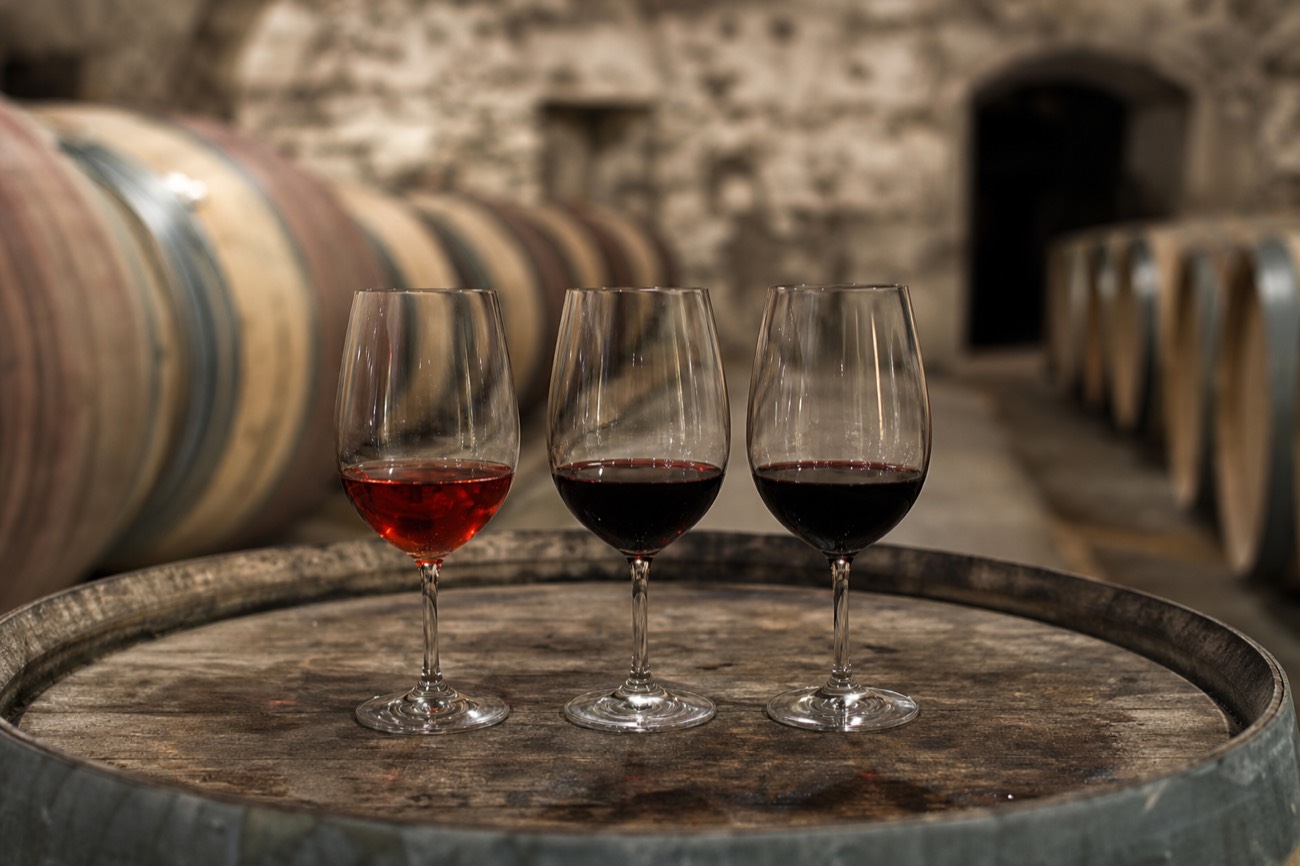
Médoc wine is built mostly on Cabernet Sauvignon grown in gravel soil, giving it firm tannin and a structure that rewards ageing; Saint-Émilion wine is built mostly on Merlot grown in clay and limestone, giving it a softer, rounder texture that's easier to enjoy young. The difference isn't subtle once you taste them side by side, and it comes down to two things: which grape dominates the blend, and what that grape grows in.
Use the options below to weigh taste both banks or visit one. Start with the booking choice, or refine the shortlist after the guide.
Booking choice: A one-hour tasting of a white, a Left Bank red and a Right Bank red, with cheese and charcuterie at Olala in central Bordeaux. View Bordeaux Tasting Class
Why does the grape blend differ so much between the two?
Médoc, on Bordeaux's Left Bank, sits on gravel-heavy soil that drains fast and offers little nutrition, exactly the kind of stress Cabernet Sauvignon thrives under. The vine has to work for its water, which thickens the grape skins and concentrates tannin and flavor. Médoc reds are Cabernet Sauvignon-dominant, blended with smaller amounts of Merlot and other varieties to round out the edges.
Saint-Émilion, on the Right Bank's limestone plateau, has cooler, moisture-retentive clay and limestone soils that Merlot handles better than Cabernet, which struggles to fully ripen there. Saint-Émilion reds are Merlot-dominant, with other Right Bank varieties filling out the blend rather than Cabernet Sauvignon leading it. See Cabernet Sauvignon and the Médoc region's own page for more on how the grape and the place interact.
What does that actually taste like in the glass?
Médoc wine tends to open firm and tannic, sometimes almost austere in its youth, with cassis, cedar and graphite notes that soften and deepen over years in the bottle. It's a wine built for the long game, the kind serious collectors set aside and forget about for a while. Saint-Émilion wine tends to be plusher from the start: darker plum and black-cherry fruit, softer tannin, a rounder mouthfeel that doesn't demand years of cellaring to be enjoyable. Both are unmistakably Bordeaux reds, but the texture difference is the kind of thing even a casual taster notices within the first sip.
Taste them back to back and the gap is obvious even to someone who's never studied wine. Pour a young Médoc next to a Saint-Émilion of similar age and the Médoc will usually grip the sides of your tongue first, a dry, slightly puckering sensation from the tannin, before the fruit shows through underneath. The Saint-Émilion tends to arrive fruit-first, rounder on entry, with less of that initial grip. Neither reaction means one wine is "better," it's just what Cabernet Sauvignon on gravel versus Merlot on clay and limestone actually does in the mouth, and it's exactly the kind of side-by-side moment a guided tasting is built to walk you through.
The finish tells a similar story. A Médoc red tends to hang on longer after you swallow, with that tannic grip resolving slowly into cedar and graphite notes. A Saint-Émilion tends to fade a little faster and softer, closer to the plum and cherry fruit it opened with. Neither finish is short in absolute terms, both are proper Bordeaux reds built with real structure, it's just a difference in how the structure is delivered.
Which one ages better, and does that matter for a casual drinker?
Médoc's higher tannin and Cabernet Sauvignon backbone generally give it a longer ageing window, which is part of why the original 1855 Classification, built around Médoc estates, prized exactly this kind of structure. Saint-Émilion wines can age well too, especially from top estates, but many are approachable much sooner. For a casual drinker who isn't planning to cellar a bottle for a decade, that difference matters less than it sounds: a well-made Saint-Émilion drunk within a few years of release will usually taste more immediately generous than a young Médoc that hasn't had time to soften.
Which is more approachable for a wine-tasting first-timer?
Saint-Émilion is generally the friendlier starting point for a first-time taster: its softer tannin and rounder fruit read as more immediately pleasant than a young, firmly tannic Médoc. That's not a knock on Médoc, it's simply a texture that often takes a bit more context (and a bit more bottle age) to appreciate fully.
This is exactly why the site's featured tour, the Médoc or Saint-Émilion half-day château tour, 4.8 rating), lets you choose rather than forcing a pick. Both versions of the tour include a guided tasting plus a cheese and charcuterie pairing, so the format stays the same either way, only the wine in the glass changes. If you already know you prefer big, structured reds, take the Médoc option; if you want the softer, easier introduction, take Saint-Émilion. First-timers who genuinely don't know their preference yet might lean toward Saint-Émilion, or toward the Margaux discovery tour, which visits a classified Médoc estate known for a comparatively elegant, less austere style within the Left Bank itself.
Price perception follows a similar pattern in the wider market: Médoc's classified growths, propped up by the 1855 Classification's long shadow, often command higher prices at the top end, while excellent Saint-Émilion can be found at friendlier price points, though its own top estates, like the ones near Château Cheval Blanc, compete with anything the Left Bank produces. See Château Cheval Blanc for one of the Right Bank's own icon names.
| Médoc | Saint-Émilion | |
|---|---|---|
| Dominant grape | Cabernet Sauvignon | Merlot |
| Soil | Gravel | Clay and limestone |
| Tannin | Firmer, more grip | Softer, rounder |
| Best suited to | Patient tasters, structured reds | First-timers, easier-drinking reds |
If the question for you is less about the wine itself and more about which tour format fits your trip, Médoc or Saint-Émilion: which tour to book covers that decision directly. And if you want the fuller regional picture before choosing, the guide to Bordeaux's wine regions lays out Pomerol, Graves and Sauternes alongside these two as well. Still on the fence about booking a guided tasting at all rather than just buying a bottle? Is a Bordeaux wine tour actually worth it makes the honest case either way, and you can browse the full list of Bordeaux wine tours to see what's running on either bank right now.