Margaux Wine Region: What to Know Before You Visit
Margaux gave its name to the most famous wine label most people have never tasted. Here's what the appellation actually is, and how to see it without an appointment you'll never get.
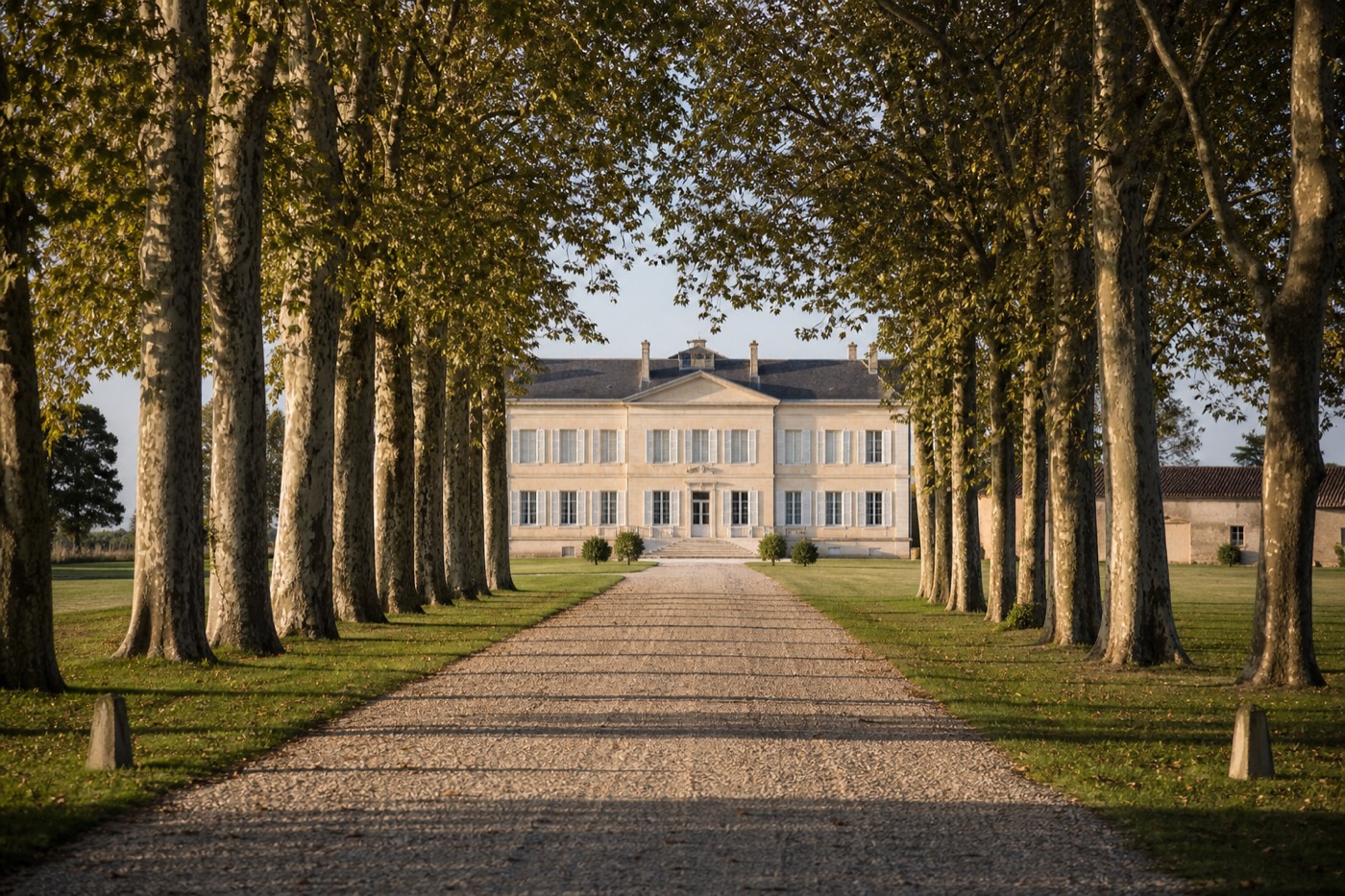
Margaux comes up constantly in Bordeaux planning searches, and for a first-time visitor it's genuinely unclear at first whether it's a wine, a village, a specific château, or all three at once. It's all three, and untangling that is the first real step in planning a Left Bank day around it. This guide covers the appellation itself: its geography, its style, which of its estates you can actually visit, and the two tours built specifically to reach it.
Use the options below to weigh private Margaux route or shared Médoc visit. Start with the booking choice, or refine the shortlist after the guide.
Booking choice: A four-hour Margaux minivan outing with two winery visits, tastings and an exterior photo stop at Château Margaux. View Margaux Château Half Day
Approximate drive time from Bordeaux to each Médoc commune
Approximate one-way drive times from Bordeaux city centre; Margaux is the closest of the four famous Médoc communes to the city.
Is Margaux on the Left Bank or the Right Bank?
Margaux is firmly Left Bank: it's a commune within the Médoc, on the western side of the Gironde estuary, on gravel soil that favors Cabernet Sauvignon, the same broad family as Pauillac, Saint-Julien and Saint-Estèphe to its north. If you've read that it's the "most elegant" of the Médoc communes, that reputation sits on the Left Bank side of the river, not the Right Bank's Merlot country.
It's an easy thing to be unsure about, since Margaux is also just a common word and a common first name, which muddies search results. Geographically, though, it's unambiguous: Margaux sits roughly 30 minutes' drive northwest of Bordeaux city, the southernmost of the Médoc's four famous communes, closest to the city of the four and generally considered the most accessible for a half-day trip. The guide to Bordeaux's wine regions covers the full Left Bank/Right Bank split if the wider geography is still unclear.
That confusion shows up constantly in search behavior, and it's worth addressing directly: searching "is Margaux left bank" returns a genuine question people ask before booking, not a trivial one. The honest answer has no exceptions or footnotes. Every classified estate, every visitor-built château, and the village itself all sit on the Left Bank, sharing the same gravel geology and Cabernet Sauvignon-first winemaking philosophy as the rest of the Médoc, never the Right Bank's Merlot-and-limestone world across the estuary.
What makes Margaux's wine style distinct within the Médoc?
Margaux is generally considered the most elegant and perfumed of the four Médoc communes, a step lighter and more aromatic than Pauillac's power or Saint-Estèphe's firmness, while still built on the same Cabernet Sauvignon-dominant, gravel-soil foundation as its neighbors. "Elegant" isn't marketing fluff here, it's the specific way tasters describe the appellation compared to its siblings.
The soil is part of the explanation. Margaux's gravel terraces are some of the thinnest and most well-drained in the Médoc, which pushes the vines to work harder for water and nutrients, the same broad mechanism that produces structure across the Left Bank, but here it results in a wine that reads as more perfumed and finer-boned rather than simply powerful. It's the appellation most often reached for when someone wants to understand why Left Bank Bordeaux is prized for elegance and not just tannic muscle. See Cabernet Sauvignon for more on how the grape behaves across different soils.
Margaux is also the only Médoc commune whose appellation name matches its most famous château exactly, which adds to the confusion for first-time researchers. Château Margaux is one property among dozens in the appellation, not a synonym for the whole commune's wine, in the same way Pauillac the appellation is much bigger than any single château that shares its geography.
How many classified estates does Margaux actually hold?
Margaux holds 21 classified growths from the 1855 Classification, more than any other commune in Bordeaux, including Pauillac despite Pauillac's three First Growths: 1 First Growth, 5 Second Growths, 10 Third Growths, 3 Fourth Growths and 2 Fifth Growths. That sheer density of classified names is a big part of why Margaux tastings so often move between multiple estates in a single afternoon.
| Margaux's 1855 classified growths, by tier | Count |
|---|---|
| First Growth | 1 (Château Margaux) |
| Second Growth | 5 |
| Third Growth | 10 |
| Fourth Growth | 3 |
| Fifth Growth | 2 |
| Total | 21 |
That density also explains why the appellation supports such a range of visitor experiences within a small area. A traveler who can't get an appointment at one Third Growth estate genuinely has 20 other classified alternatives within the same commune, a luxury few other Bordeaux appellations offer at this concentration. It's part of why the Margaux discovery tour can promise a real classified château visit with relatively reliable availability: the operator isn't dependent on a single relationship with a single hard-to-book estate, there's real depth on the bench.
It also explains why "Margaux" on a map covers more ground than the village of the same name suggests. The Margaux appellation, officially recognized in 1954, spans roughly 1,530 hectares across five communes: Margaux and Cantenac at its center, with Soussans marking its northern edge and Labarde and Arsac its southern edge. A château can carry the Margaux appellation on its label while its actual address sits in Cantenac or Arsac rather than Margaux village itself, which occasionally confuses visitors trying to locate a specific estate on a map.
Which châteaux define Margaux, and can you actually visit them?
Château Margaux itself, a First Growth, is open by appointment only, months ahead, with tastings reserved for professionals; the appellation's real visitor access comes through its 5th Grand Cru Classé and other visitor-built estates rather than the headline name. This is the single most important thing to know before planning a Margaux day around the château on the label.
The full breakdown of exactly what's open and what isn't, château by château, across Margaux and the wider Médoc, is covered in famous Bordeaux châteaux you can actually visit. The short version for Margaux specifically: the appellation has one of the highest concentrations of classified growths in the Médoc, and while the First Growth itself stays closed to casual visitors, several of its neighboring classified estates run real guided tasting programs built for exactly the kind of half-day visit most travelers actually want.
It helps to hold two facts side by side here. First, Margaux's fame rests almost entirely on one château's name, even though the appellation itself contains dozens of producers making genuinely excellent, structurally similar wine. Second, that single-name fame is exactly why so many visitors arrive assuming a Margaux day means a Château Margaux day, when in practice it almost never does. Adjusting that expectation before departure, rather than during the drive out, is the difference between a slightly disappointing afternoon and a genuinely good one.
| Margaux at a glance | |
|---|---|
| Bank | Left Bank |
| Grape mix | Cabernet Sauvignon-dominant |
| Soil | Thin, well-drained gravel |
| Wine style | Most elegant and perfumed of the Médoc's four famous communes |
| Drive from Bordeaux | Roughly 30 minutes, the closest of the four communes to the city |
| Most famous name | Château Margaux, First Growth, appointment only, tastings for professionals |
How do you actually visit Margaux as a traveler?
Two tours on this site cover Margaux directly: the half-day Margaux discovery tour, built entirely around the appellation, and the private Citroën DS Médoc tour, which includes Margaux as the first leg of a wider Left Bank route. Both skip the appointment chase at the First Growth entirely and go straight to estates that are set up to receive you.
The verified Margaux half day is a four-hour small-group minivan outing with two winery visits and an exterior Château Margaux photo stop. Meet at Olala in central Bordeaux. The published booking age band is 18–99; confirm arrangements directly if traveling with younger visitors. Estates can vary by departure.
The private Citroën DS route uses a chauffeur-driven classic car. Its half-day option visits Margaux and Saint-Julien; the full-day option continues into Pauillac and Saint-Estèphe. Ask for the specific estates you want before booking, and check which tasting and meal charges are included in your quote.
| Margaux discovery tour | Private Citroën DS Médoc tour | |
|---|---|---|
| Price | Check the provider quote for your date, party and options. | Check the provider quote for your date, party and options. |
| Duration | 4h | 8h (full-day option) |
| Format | Small-group minivan, max 8 | Private chauffeur-driven classic car |
| Coverage | Margaux only | Margaux plus Saint-Julien, Pauillac, Saint-Estèphe on the full day |
What does a half day in Margaux actually look like?
A typical half-day Margaux visit runs a fixed rhythm: transport out from the city, a cellar tour and tasting at a classified estate, then a short photo stop at Château Margaux itself before heading back, roughly four hours door to door. It's a compact format, but it covers the appellation's essential character in a single sitting.
| Time | Stop |
|---|---|
| Depart Bordeaux | Roughly 50-minute drive from the city into the Médoc, along what's sometimes called the "Route des Châteaux" |
| First estate | Guided cellar tour of a 5th Grand Cru Classé château |
| Tasting | Three wines from the estate's own range |
| Second estate | Transfer to a second property for two further tastings |
| Photo stop | Roughly 10 minutes at Château Margaux's gates and avenue |
| Return | Roughly 50-minute drive back to Bordeaux city |
That pacing is exactly why the Margaux discovery tour works well as a half-day add-on to a Bordeaux city stay rather than a full-day commitment. It doesn't try to cover the whole Médoc, it covers one appellation properly, in the time most travelers actually have free.
The five wines poured across the two estates, three at the first and two at the second, are deliberately structured to show range rather than repeat the same style twice. The first estate's tasting, at the classified château, tends to lead with the appellation's signature elegance; the second stop rounds out the picture with a contrasting expression, whether that's a younger vintage, a different blend ratio, or simply a smaller producer's take on the same soil. It's less about quantity of wine and more about giving a first-time Margaux taster two genuinely different reference points inside one appellation, rather than one château's single house style standing in for the whole commune.
How does a Margaux half day fit into a longer Bordeaux trip?
A Margaux half day works well as a single excursion within a Bordeaux city stay of three or more nights, leaving the rest of the trip free for the city itself, Saint-Émilion, or a second Médoc day rather than requiring a dedicated wine-country base. Most visitors stay in Bordeaux city and day-trip out, rather than basing themselves in the Médoc. There's no practical reason to base yourself in Margaux itself for a single tasting day: the village has limited tourist infrastructure compared to Bordeaux city, and the roughly 30-minute drive each way is short enough that a city base loses nothing in convenience while gaining everything else Bordeaux itself offers in the evening.
If you're still deciding on trip length overall, how many days you need in Bordeaux covers that broader question, and the best area to stay in Bordeaux for a wine trip covers where to base yourself for easy access to day trips like this one. A Margaux morning pairs naturally with an afternoon back in the city center, since the tour returns by early-to-mid afternoon, well within the window to still see Place de la Bourse or the Old Town the same day.
How does Margaux compare to Pauillac, Saint-Julien and Saint-Estèphe?
Margaux is generally the most elegant and perfumed of the four; Pauillac is the most powerful and home to three First Growths; Saint-Julien sits in between as the most consistently balanced; Saint-Estèphe, the northernmost, is the firmest and most tannic. All four share the same Cabernet Sauvignon-and-gravel foundation, they just express it differently.
The Pauillac, Saint-Julien and Saint-Estèphe guide covers the other three communes in the same depth this page covers Margaux, including the specific classified-growth counts for each. If the goal is to compare Margaux's style directly against its neighbors before choosing where to spend a limited afternoon, that's the guide to read next; if it's really Margaux specifically that matters, the Margaux discovery tour remains the most direct booking.
| Margaux | Pauillac | Saint-Julien | Saint-Estèphe | |
|---|---|---|---|---|
| Classified growths | 21 | 18 | 11 | 5 |
| Style | Elegant, perfumed | Powerful, structured | Balanced | Firm, tannic |
| Distance from Bordeaux | ~30 min | ~45 min | ~40 min | ~50 min |
| First Growths | 1 (Château Margaux) | 3 (Lafite, Latour, Mouton) | 0 | 0 |
That First Growth count is worth sitting with for a moment, because it flips a common assumption. Pauillac's three First Growths make it the commune most people assume is Bordeaux's single most prestigious address, and by icon-name density it is. But Margaux's 21 total classified growths against Pauillac's 18 means Margaux actually holds more classified real estate overall, spread across five tiers rather than concentrated at the very top. Neither fact makes one commune objectively better, they're just different shapes of prestige: Pauillac's is a small number of extremely famous names, Margaux's is breadth across the whole classified ladder.
For a visitor, that breadth translates into something practical: a Margaux day is less likely to be built entirely around one hard-to-book icon estate, since so much of the appellation's identity is distributed across 21 different addresses rather than concentrated in three. A Pauillac day, by contrast, is harder to separate from the shadow of Lafite, Latour and Mouton Rothschild, even when the actual itinerary visits none of them. Margaux's more even spread makes it, in a real sense, an easier commune to plan a satisfying day around without chasing a single famous gate.
Should you pair Margaux with a full Médoc day, or keep it to a half day?
A half day is enough to properly experience Margaux on its own; a full day pairing it with Saint-Julien, Pauillac and Saint-Estèphe only makes sense if seeing that wider stretch of the Médoc, not just Margaux specifically, is the actual goal. The two options serve genuinely different trip priorities, not just different budgets.
The Margaux discovery tour is built for the half-day case: focused, efficient, back in the city by early afternoon, with the rest of the day free for Bordeaux itself. The private Citroën DS Médoc tour's full-day option is built for the opposite case, travelers who specifically want to cover Pauillac and Saint-Estèphe as well, and are willing to trade a longer day and a much higher price for that broader reach. Neither is a better way to "do" Margaux; the full-day option simply asks Margaux to share the day with three other communes rather than have it to itself.
| If you want | Choose |
|---|---|
| Margaux specifically, efficiently, back in the city by afternoon | Margaux discovery tour (half day, a date-dependent price) |
| Margaux plus the wider Médoc's famous names, and don't mind the cost | Private Citroën DS Médoc tour, full-day option (a date-dependent price) |
| Margaux plus a Right Bank contrast in the same trip, different days | Margaux discovery tour, then separately book a Saint-Émilion tour |
When is the best time to visit Margaux?
May-June and September-early October are the two strongest windows for a Margaux visit, mild weather, blooming or harvest-season vines, and lighter crowds than the July-August peak. The seasonal pattern here matches the rest of the Médoc, since it's driven by the same climate and harvest calendar.
The Margaux discovery tour, like the rest of the region's half-day tours, tends to fill on summer weekends and again during harvest season, when demand and the estates' own visiting hours both get busier. The best time of year for a Bordeaux wine tour covers the full seasonal picture across the whole region if you're still deciding when to travel at all.
Is it worth visiting Margaux independently instead of on a guided tour?
Independent visits work for travelers who are already renting a car and want to build their own schedule, but most classified Margaux estates still require an advance appointment even for a self-driven visitor, so the main thing you're trading for is control of pace, not a shortcut past the booking process. A guided tour and an independent visit both require planning ahead; they just distribute the planning work differently.
Self-drive rental in the region runs roughly EUR 40-70 a day, and most independent tastings at estates that accept individual visitors are free to around EUR 20 per person, figures that hold across the wider Médoc, not Margaux specifically. The catch is availability rather than price: a solo traveler emailing a handful of Margaux châteaux directly, without a tour operator's existing relationships, is competing for the same limited appointment slots as everyone else, often with less leverage to actually secure one. The Margaux discovery tour's operator has already done that relationship-building, which is the real value being paid for, not just the transport.
| Independent visit | Margaux discovery tour | |
|---|---|---|
| Cost | EUR 40-70/day car rental, plus free-EUR 20/person tastings | Check the provider quote for your date, party and options. |
| Booking effort | Contact each estate yourself, no guaranteed access | One booking, access pre-arranged |
| Schedule control | Full control of pace and stops | Fixed itinerary |
| Best suited to | Travelers already renting a car for the wider trip | Travelers without a car, or who want the access handled |
Ready to book the Margaux half-day rather than keep researching? See current availability for the Margaux discovery tour and lock in a date before the weekend slots fill.