Pauillac, Saint-Julien & Saint-Estèphe: the Left Bank's Grand Cru Villages
Three small Médoc communes hold most of Bordeaux's most famous names between them. Here's what actually separates Pauillac, Saint-Julien and Saint-Estèphe, and the one tour built to see all three.
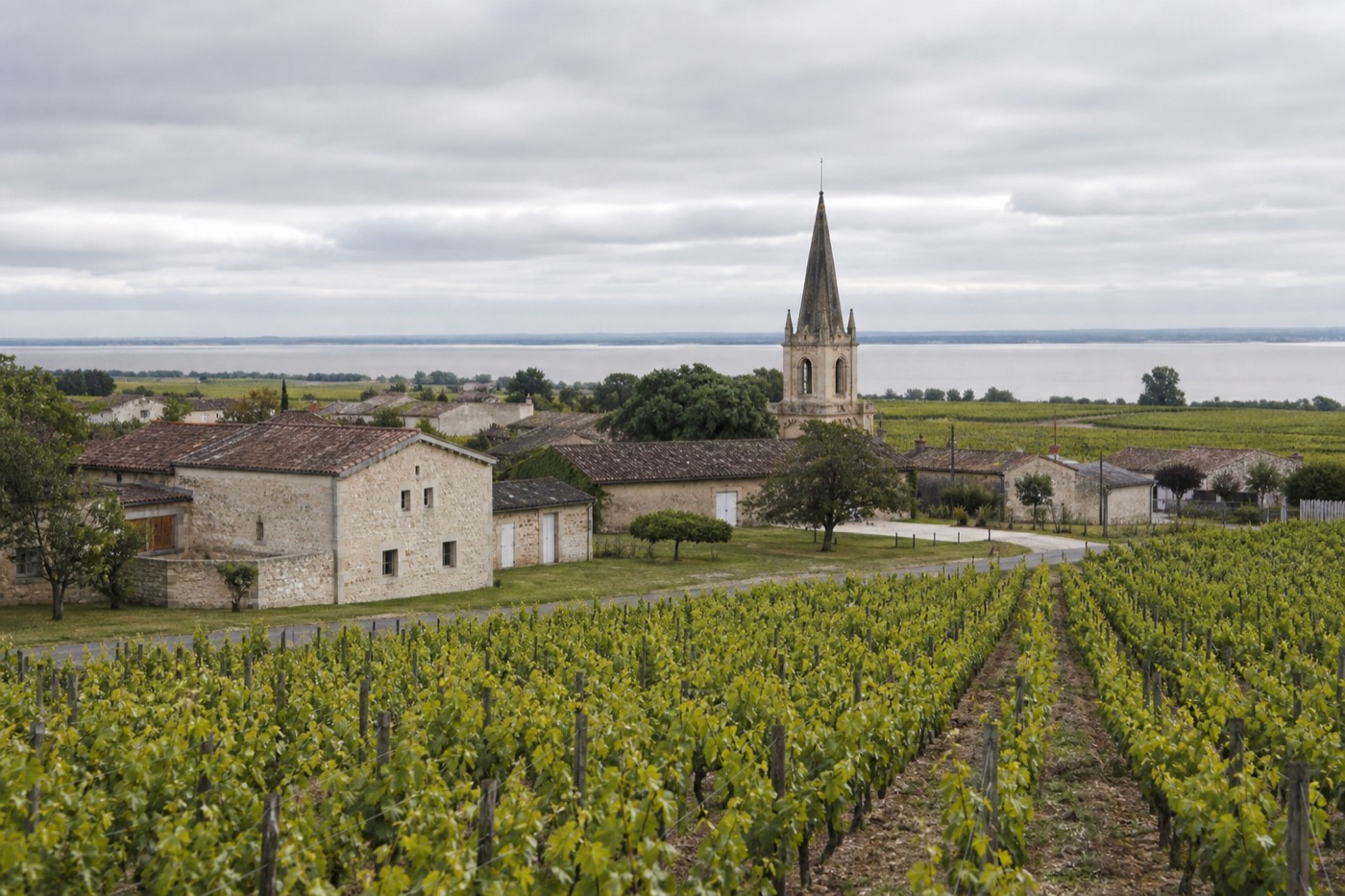
Drive north from Margaux along the D2, the "Route des Châteaux," and the vineyards don't change dramatically, but the names on the gateposts do. This is the stretch of the Médoc that produced three of the world's five First Growths within a few kilometers of each other, and where the region's classification system carries the most obvious weight. Here's what actually separates the three communes, and the single tour built to see all of them in one day.
Use the options below to weigh plan your full Médoc route. Start with the booking choice, or refine the shortlist after the guide.
Booking choice: An eight-hour small-group Médoc route with an English-speaking guide, minivan transport and wine tasting fees included. View Full-Day Médoc Tour
Number of 1855-classified growths, commune by commune
1855 Classification counts per commune; Pauillac alone holds three of the world's five First Growths.
What are Pauillac, Saint-Julien and Saint-Estèphe, and why do they matter?
Pauillac, Saint-Julien and Saint-Estèphe are three adjoining communes on the Médoc's Left Bank, strung along the Gironde estuary north of Margaux, together holding a striking concentration of Bordeaux's 1855 classified growths, including three of the five First Growths. If Margaux is the Médoc's most elegant commune, these three are its power center.
Pauillac sits in the middle of the trio geographically and carries the most weight historically: 18 classified growths from the 1855 Classification, including Lafite Rothschild, Latour and Mouton Rothschild, three of the world's five First Growths in one small commune. Saint-Julien, just south of Pauillac, holds 11 classified growths and is generally described as the most consistently balanced of the Médoc's communes. Saint-Estèphe, the northernmost of the four famous Médoc communes, holds 5 classified growths and is known for firmer, more tannic wine than its southern neighbors. The Margaux wine region guide covers the fourth and southernmost of the group if you want the full Médoc picture.
The road that connects them, the D2, sometimes called the Route des Châteaux, is the single most concentrated stretch of famous wine real estate anywhere in the world. In under an hour's drive, it passes through communes responsible for a wildly disproportionate share of Bordeaux's global reputation relative to their actual physical size, none of these three communes is more than a few kilometers across. That density is exactly why a single tour can realistically string all three together in one day, something that would be far harder in a wine region where the equivalent famous names were scattered across a much larger area.
| Commune | Classified growths (1855) | Notable names | Style |
|---|---|---|---|
| Pauillac | 18 | Lafite Rothschild, Latour, Mouton Rothschild | Powerful, structured, the Médoc's most concentrated prestige |
| Saint-Julien | 11 | Several 2nd growths | Consistently balanced, often called the "middle ground" style |
| Saint-Estèphe | 5 | Cos d'Estournel | Firmest and most tannic of the four famous Médoc communes |
Pauillac: home to three First Growths, but not much walk-in access
Pauillac's fame rests on Château Lafite Rothschild, Château Latour and Château Mouton Rothschild, all First Growths within a few kilometers of each other, but that concentration of prestige doesn't translate into easy visiting: Latour is closed to the public entirely, Lafite is currently closed for renovation, and Mouton Rothschild takes appointments roughly two months ahead. Pauillac is a commune to admire from the road as much as to book into.
The full detail on exactly what's open and what isn't among Pauillac's famous names is covered in famous Bordeaux châteaux you can actually visit. The short version: Mouton Rothschild is the realistic target for anyone determined to see one of Pauillac's First Growths in person, with its Museum of Wine in Art folded into the guided visit. Beyond the three headline names, Pauillac holds another 15 classified growths at various tiers, several of which run more accessible guided programs.
Pauillac the town, not just the appellation, is worth a mention too. It's a real working port on the Gironde estuary, historically a stop for ships headed further up the river, with its own small-town character beyond the vineyards that surround it. The wider Gironde area around Pauillac is also known for Agneau de Pauillac, a Label Rouge and IGP-certified milk-fed lamb with roots tracing back to 13th-century shepherds who brought their flocks down from the Pyrenees each summer. It's a genuinely old piece of regional food culture running in parallel to the wine, and it's part of why lamb turns up so often on menus in this stretch of the Médoc, a natural pairing for the powerful, structured reds the appellation is famous for.
Saint-Julien: the smallest of the four, and the most consistently balanced
Saint-Julien is the smallest of the Médoc's four famous communes by both area and number of classified growths, and it's generally regarded as the most consistently high-quality: fewer weak vintages, a style that sits between Margaux's elegance and Pauillac's power. It's a commune wine drinkers often reach for specifically because it rarely disappoints.
Its 11 classified growths include five 2nd growths, a strong showing for such a small area, which is part of why Saint-Julien's reputation for reliability persists among collectors even though it lacks a First Growth of its own. For a visitor, that consistency doesn't always translate into easier access, most Saint-Julien estates still run on the same appointment-based system as the rest of the classified Médoc, but it does mean a tasting here is a reliable way to understand Left Bank Cabernet Sauvignon at a genuinely high level without chasing an icon name.
Saint-Julien is also the only commune of the three included on both the half-day and full-day options of the private Citroën DS Médoc tour, which makes it the most consistently reachable of the three on this site regardless of which version you book. Pauillac and Saint-Estèphe only appear on the longer, more expensive full-day route.
What are Pauillac's Second Growths, beyond the three First Growth names?
Pauillac's 18 classified growths include Château Pichon Longueville Baron and Château Pichon Longueville Comtesse de Lalande among its Second Growths, two estates that regularly compete with First Growth quality without First Growth prices or First Growth-level access restrictions. They're a useful reminder that "Second Growth" in Pauillac is a relative label, not a real quality ceiling.
Both Pichon estates sit close to the border with Saint-Julien, and both are widely regarded within the wine trade as performing well above their official 1855 rank, part of a broader pattern across the classification where a Second or Third Growth from a strong commune can outperform a Fourth or Fifth Growth's reputation elsewhere. For a visitor without a First Growth appointment, these Second Growth Pauillac estates are generally a more realistic target for understanding what makes the commune's reputation, structured, powerful, built to age, than chasing Lafite, Latour or Mouton Rothschild specifically.
This is worth internalizing as a general rule across all three communes, not just Pauillac: the 1855 tier system is 170 years old and was never designed to track quality year to year, so a well-run Second, Third or even Fourth Growth today can easily outperform a First Growth's off vintage, or simply express the commune's character with more consistency than its ranking alone would suggest. None of that changes access, a Second Growth's appointment book is still an appointment book, but it does mean a visitor shouldn't read a lower 1855 tier as a lower quality ceiling. The tier tells you about 1855 prices; it tells you comparatively little about what's actually in the glass today.
Saint-Estèphe: the firmest wine, and the Médoc's most distinctive architecture
Saint-Estèphe, the northernmost of the four famous Médoc communes, produces the firmest and most tannic wines of the group, and it's also home to Cos d'Estournel, whose oriental-influenced pagoda architecture makes it one of the most visually distinctive and genuinely visitor-friendly classified estates on the Left Bank. It's the commune most likely to surprise a first-time visitor, both in the glass and at the gate.
Cos d'Estournel's story explains the architecture: Louis-Gaspard d'Estournel, the estate's 19th-century owner, made his fortune trading with Asia and built the château's cellars beneath a pair of ornate pagodas, a striking contrast to the plain 19th-century stone facades common elsewhere in the Médoc. It's open weekday mornings and afternoons, plus Saturdays from April to October, by reservation, one of the more consistently bookable classified estates in this trio. See Cos d'Estournel's own visiting hours for current details before planning around it.
Saint-Estèphe's soil is also subtly different from its three southern neighbors, with more clay mixed into the gravel than Margaux, Saint-Julien or Pauillac carry, which is part of the technical explanation for why its wines land firmer and more tannic even though the grape mix, still Cabernet Sauvignon-dominant, stays broadly consistent with the rest of the Médoc. It's a small geological difference with an outsized effect on what ends up in the glass.
| Pauillac | Saint-Julien | Saint-Estèphe | |
|---|---|---|---|
| Position | Middle of the three, on the Gironde | Southernmost of the three | Northernmost of the three |
| Soil | Gravel | Gravel | Gravel with more clay mixed in |
| Wine style | Powerful, structured | Consistently balanced | Firmest, most tannic |
| Most accessible classified estate | Château Mouton Rothschild, appointment ~2 months ahead | Several highly regarded 2nd growths, appointment-based | Cos d'Estournel, bookable most of the year |
Who should prioritize this route over a Margaux-only half day?
Travelers chasing the specific names, Lafite, Latour, Mouton Rothschild, Cos d'Estournel's pagodas, or the sheer density of First Growths in one small area, should choose this fuller route; travelers who mainly want a solid, elegant Left Bank tasting without the extra time or cost are better served by the Margaux discovery tour alone. Both are legitimate ways to spend a Médoc day, they're just answering different questions.
The Margaux wine region guide mentioned above makes the case for the shorter, cheaper, more focused half day. That guide's audience is specifically travelers who already know Margaux won't scratch the itch, who want to see the stretch of the Médoc that produced three First Growths in a handful of kilometers, even knowing full well that seeing isn't the same as entering for most of those names.
Is there one tour that actually visits all three communes?
Yes: the full-day option on the private Citroën DS Médoc tour is the only product on this site that reaches Pauillac and Saint-Estèphe at all, adding them to Margaux and Saint-Julien, which its own half-day option already covers. No other tour on the site currently ventures this far up the Médoc peninsula. Every other product either stays in Margaux specifically, crosses to the Right Bank, or covers multiple sub-regions without pushing north past Saint-Julien, which makes this full-day option genuinely unique in the current lineup rather than simply the pricier version of something else on offer.
The private Citroën DS route pairs a classic car with a chauffeur-guide. Choose the full day for Margaux, Saint-Julien, Pauillac and Saint-Estèphe; the shorter option covers Margaux and Saint-Julien. The private itinerary can be tailored, but specific estate appointments need confirmation. The shared full-day Médoc option below is another way to explore the region when you are flexible about individual stops.
| Half-day option | Full-day option | |
|---|---|---|
| Communes covered | Margaux and Saint-Julien | Margaux, Saint-Julien, Pauillac and Saint-Estèphe |
| Château visits | 2 châteaux | 2-3 châteaux |
| Lunch | Not standard | Optional picnic or restaurant stop |
| Advance notice for prestigious estates | 2-6 weeks, per the tour's own listing | Same |
Anyone who wants to see Pauillac's landscape and Château Latour's famous round tower from the road, even without entering, or Saint-Estèphe's pagodas at Cos d'Estournel, needs the full-day option specifically. The half-day covers real ground, but it stops well short of the peninsula's northern communes.
What does the full-day option actually cost, and is it worth the premium?
Compare the private Citroën DS quote with the shared full-day Médoc tour for the same date and party. The private route offers a dedicated car and guide, hotel pickup and a tailored itinerary across the four communes on its full-day option. Check tasting fees and lunch on both quotes; a fixed price multiple would misrepresent changing dates and group sizes.
| Half-day Médoc tour (shared) | Private Citroën DS, full day | |
|---|---|---|
| Price | Check the provider quote for your date, party and options. | Check the provider quote for your date, party and options. |
| Format | Small-group minivan | Private, chauffeur-driven classic car |
| Communes reached | Margaux (or Saint-Émilion on the Right Bank option) | Margaux, Saint-Julien, Pauillac, Saint-Estèphe |
| Who it suits | Budget-conscious travelers, first-timers, solo travelers | Travelers prioritizing the full Left Bank sweep and a private, flexible pace |
For travelers who specifically want to say they've seen Pauillac and Saint-Estèphe, not just Margaux, there's no cheaper substitute currently available. The premium is the cost of reaching real estate no shared, budget tour on this site currently covers.
What does a full day across all three communes actually look like?
A realistic full day threads north from Margaux through Saint-Julien to Pauillac, with a photo stop at one of Pauillac's famous names, before finishing in Saint-Estèphe, roughly 2-3 château visits total across the stretch rather than one stop per commune. The distances are short by car, but each château visit and tasting takes real time, which is what actually limits how many communes a single day can properly cover.
| Approx. time | Leg | What happens |
|---|---|---|
| Morning | Depart Bordeaux, arrive Margaux | First château visit and tasting |
| Mid-morning | Margaux to Saint-Julien | Short drive north along the Route des Châteaux |
| Late morning | Saint-Julien | Second château visit, focused on the commune's balanced style |
| Midday | Saint-Julien to Pauillac | Photo stop at one of the famous First Growth facades, seen from the road |
| Early afternoon | Pauillac | Lunch, picnic or restaurant stop depending on the day's arrangement |
| Mid-afternoon | Pauillac to Saint-Estèphe | Final leg north |
| Late afternoon | Saint-Estèphe | Optional third château visit, possibly near Cos d'Estournel's pagodas |
| Evening | Return to Bordeaux | Roughly 8 hours door to door in total |
The Margaux wine region guide covers the southern end of this same route in more depth if the trip is really centered on Margaux with these three as a bonus rather than the main event. And if seeing Lafite, Latour or Mouton Rothschild specifically is the goal, the famous Bordeaux châteaux guide mentioned earlier lays out exactly what's realistic for each name before you book.
| All four Médoc communes, classified growths compared | Count |
|---|---|
| Margaux | 21 |
| Pauillac | 18 |
| Saint-Julien | 11 |
| Saint-Estèphe | 5 |
Together, these four communes hold 55 of the roughly 60 classified growths in the entire 1855 Médoc ranking, which is a useful way to grasp just how concentrated Bordeaux's most historic prestige really is: four small communes, a combined area you could drive across in under an hour, account for nearly the whole of one of the world's most famous wine classifications.
Should this route be split across two separate days instead of one?
For most travelers, one full day is the right call, since the four communes sit close enough together that splitting them adds a second day of transport time without meaningfully improving the château access at any single stop. Splitting only makes sense for a narrower group of travelers with a specific reason to slow down.
The exception is travelers who've secured a real appointment at one of the harder-to-book classified estates, Mouton Rothschild in particular, where the visit itself runs two to two and a half hours including the museum and tasting. Trying to fold a two-and-a-half-hour Mouton Rothschild appointment into the same day as three other château stops risks running the whole schedule late. Anyone with a confirmed Mouton Rothschild booking is often better served treating that appointment as its own half day, arranged independently, and using the private Citroën DS Médoc tour for the rest of the Left Bank sweep.
Ready to see the Médoc's grand cru heartland in one day? Check availability for the full-day Citroën DS route that reaches Pauillac and Saint-Estèphe.
How does a Left Bank grand cru day compare to a Right Bank Saint-Émilion day?
A Pauillac-Saint-Julien-Saint-Estèphe day leans into structure, power and classification history; a Saint-Émilion day leans into a walkable medieval village alongside the wine, a genuinely different kind of day even before the wine style itself is considered. Neither replaces the other, and travelers with more than one day free often do both rather than choosing.
The best wineries to visit in Saint-Émilion guide covers the Right Bank equivalent of this same planning question, including which of Saint-Émilion's famous names are actually bookable and which, like this side of the river, stay closed to casual visitors. If the trip only has room for one Médoc-versus-Saint-Émilion choice, Médoc or Saint-Émilion: which tour to book walks through that decision directly.
Travelers who do have room for both often find the contrast itself is the reward: tasting a firm, structured Saint-Estèphe red one day and a rounder, plum-forward Saint-Émilion Merlot the next makes the Left Bank/Right Bank split covered in the guide to Bordeaux's wine regions concrete in a way no amount of reading about gravel versus limestone soil can fully replace. Two days, one on each bank, is a genuinely satisfying way to spend the wine-focused portion of a longer Bordeaux stay.