Best Wineries to Visit in Saint-Émilion (Beyond the Village)
Saint-Émilion's medieval streets get most of the attention, but the real wine decision happens outside the village walls, in the estates scattered across its limestone plateau.
Most visitors reach Saint-Émilion, look at the honey-stone rooftops, and stop there, treating the village itself as the destination. That's a mistake if wine is actually the point of the trip. The village sits on top of the appellation, not in the middle of it, and the estates worth booking are scattered across the plateau and slopes around it. This guide is about choosing among those estates specifically, not the village logistics already covered elsewhere on this site.
Use the options below to weigh how do you want to explore Saint-Émilion. Start with the booking choice, or refine the shortlist after the guide.
Booking choice: Choose Médoc or Saint-Émilion when booking. One château, a guided tasting and French appetizers, with return minivan transport from Bordeaux. View Half-Day Château Tour
Time investment vs. château access, by tour
Duration in hours against how many classified estates each format actually visits, based on each tour's own published itinerary.
Which Saint-Émilion winery should you actually visit?
There's no single "best" Saint-Émilion winery for a visitor, because the region's most famous names, Château Cheval Blanc and Pétrus, don't take casual visitors at all; the real question is which of the region's genuinely bookable classified estates fits the route you're taking. This page is about winery selection specifically, once you're past the question of whether to make the trip at all.
If you haven't yet settled the logistics of getting to Saint-Émilion, when to go, how long to spend and whether to drive, train or join a tour, the Saint-Émilion day trip from Bordeaux guide covers that ground in full. This page assumes you're going and focuses on the part that guide doesn't: which estates within the appellation are actually worth prioritizing, and how.
The distinction matters because "visit Saint-Émilion" and "visit a Saint-Émilion winery" are two different trips that happen to share a destination. Plenty of visitors spend a full day in the village, eat well, buy a bottle from a wine shop, and leave without ever setting foot inside a working château. That's a perfectly good day. It's just a different day from the one this guide is planning around, which assumes the winery visit itself, not just the medieval streets above it, is the point.
How is Saint-Émilion's own classification different from the Médoc's 1855 system?
Saint-Émilion runs a separate classification created in 1955, revised roughly every ten years rather than frozen since the 19th century, with tiers called Premier Grand Cru Classé A, Premier Grand Cru Classé B, and Grand Cru Classé. Unlike the Médoc's static 1855 ranking, an estate here can genuinely move up or down at each revision.
The list has been updated in 1969, 1986, 1996, 2006, 2012 and most recently 2022, which means a Saint-Émilion classification you read about from a decade ago may already be out of date in a way the 1855 Classification never is. That mobility gives estates a real incentive to keep improving rather than resting on a rank set generations ago. See the Classification of Saint-Émilion wine for the fuller history, and the Bordeaux wine classification explained guide covers this system alongside the 1855 ranking and Pomerol's total absence of one, if the full picture across all of Bordeaux's classification systems is useful before choosing an estate.
| Saint-Émilion classification at a glance | |
|---|---|
| Created | 1955 |
| Revised | Roughly every 10 years: 1969, 1986, 1996, 2006, 2012, 2022 |
| Tiers | Premier Grand Cru Classé A, Premier Grand Cru Classé B, Grand Cru Classé |
| Compared to 1855 | Mobile, estates can rise or fall; the 1855 Médoc ranking has barely changed in 170 years |
The 2022 classification, the most recent, lists 85 classified properties in total: 2 Premier Grand Cru Classé A estates at the very top, 12 Premier Grand Cru Classé B estates below them, and 71 Grand Cru Classé estates forming the broader base of the pyramid. That's a genuinely large pool of classified wineries to choose among, far more than the handful of icon names most visitors arrive already knowing.
| Saint-Émilion 2022 classification tiers | Number of estates |
|---|---|
| Premier Grand Cru Classé A | 2 |
| Premier Grand Cru Classé B | 12 |
| Grand Cru Classé | 71 |
| Total classified | 85 |
What's the difference between "Saint-Émilion Grand Cru" and "Saint-Émilion Grand Cru Classé"?
"Saint-Émilion Grand Cru" is an appellation, not a quality ranking, awarded to any estate meeting production rules like lower yields and longer minimum ageing; "Saint-Émilion Grand Cru Classé" is the actual selective classification, awarded only to the 85 estates that pass the periodic quality review. The near-identical names are one of the most common points of confusion in the wine, and it trips up first-time buyers and visitors alike.
Wine labeled simply "Saint-Émilion Grand Cru" covers a large share of the appellation, essentially any producer following the stricter Grand Cru production rules (lower maximum yield, higher minimum potential alcohol, longer ageing before bottling), regardless of whether an independent tasting panel ever evaluated the wine's quality. "Grand Cru Classé," by contrast, is earned only through the formal classification process reviewed roughly every ten years, the same 85-estate list covered above. A bottle can legitimately say "Grand Cru" without ever having been assessed by the classification body at all; a bottle can only say "Grand Cru Classé" if it actually made that list.
| Saint-Émilion Grand Cru | Saint-Émilion Grand Cru Classé | |
|---|---|---|
| What it is | An appellation with production rules | A selective quality classification |
| How you earn it | Meet yield, alcohol and ageing requirements | Pass the periodic tasting-panel review |
| How many estates | A large share of the appellation | 85 total (2022 classification) |
| Revised | Not applicable, it's a fixed appellation rule set | Roughly every 10 years |
That breadth matters practically. Even setting aside the two Premier Grand Cru Classé A estates entirely, since neither runs a casual visitor program, there are 83 other classified Saint-Émilion properties spanning a real range of scale, style and visitor readiness. The estate the e-bike tour actually visits sits within that broader pool of Grand Cru Classé and Premier Grand Cru Classé B properties, genuinely classified, genuinely well regarded, and genuinely bookable. That's a meaningfully different proposition from a Left Bank First Growth chase, where the realistic pool of bookable icon names narrows to a handful; on the Right Bank, "classified and accessible" describes a genuinely large slice of the appellation, not a rare exception.
Can you see Château Cheval Blanc or Pétrus while you're there?
You can see both from outside on the e-bike tour's route, but neither accepts casual visitor access: Cheval Blanc has no public tasting program, and Pétrus doesn't even retain a real château building to visit, most visitors experience it only from the public road. Both remain among the most sought-after wines in the world despite, or perhaps partly because of, that inaccessibility.
See famous Bordeaux châteaux you can actually visit for the fuller breakdown of exactly which icon names across Bordeaux are open and which aren't. For Saint-Émilion specifically, the practical takeaway is the same one that applies across the region: the famous label on the wine list isn't the estate you'll actually tour, and that's fine, because the estates that are set up to receive you are genuinely excellent in their own right.
What does the e-bike tour actually get you into?
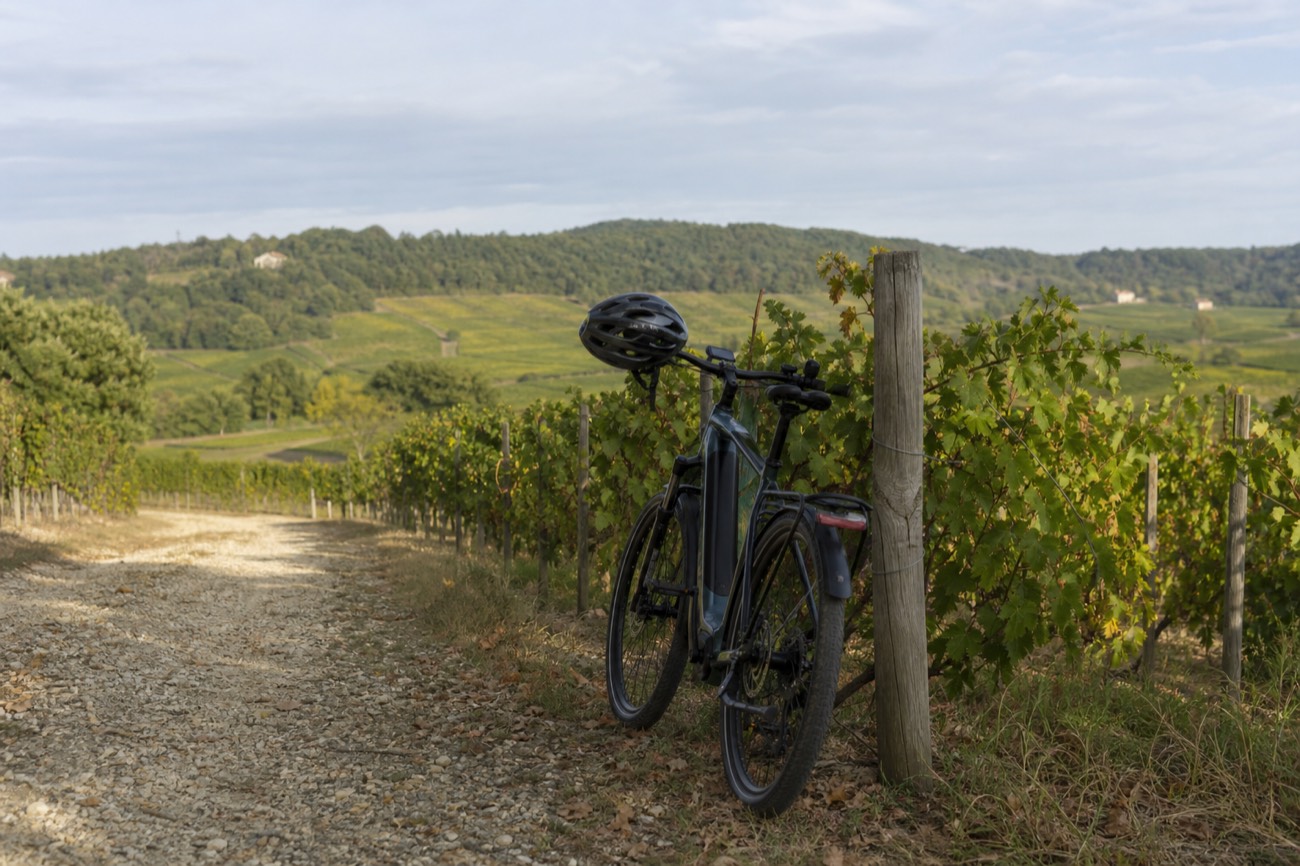
The full-day e-bike tour to Saint-Émilion visits a real Great Classified Growth estate for a cellar tour and tasting, includes a second château stop, and pours 5-6 wines total across the day, all while cycling the same terroir that produces Cheval Blanc and Pétrus. It's the most direct way to actually get inside a classified Right Bank estate rather than just admiring the famous ones from the road.
The longer Bordeaux e-bike option includes a van transfer, roughly 15 km of cycling, two château visits, a picnic and a guided village visit. Riders need to be at least 155 cm tall and comfortable cycling. The listing also offers a shorter afternoon option, so verify the selected departure and inclusions. Cheval Blanc and Pétrus are passing views; Monolithic Church and quarry admission are not promised.
The tour's own listing describes the first stop as a "Great Classified Growth" estate, language that maps onto the broader Grand Cru Classé tier covered above rather than the two rarest Premier Grand Cru Classé A names. That's exactly the sweet spot most visitors actually want: a real, independently classified Right Bank producer, with real cellars and a real reputation, at a level of access that doesn't require months of advance planning or a trade connection. The 5-6 wines poured across the two estates typically mix the appellation's signature Merlot-dominant reds with at least one other style, giving a fuller picture of the Right Bank than a single château's range alone would show.
| e-bike tour to Saint-Émilion, at a glance | |
|---|---|
| Price / duration | a date-dependent price 8.5 hours |
| Château visits | 2, including one Great Classified Growth estate |
| Tastings | 5-6 wines total |
| Famous names passed | Château Cheval Blanc, Pétrus, viewed from the route, no entry |
| Also included | Picnic lunch, guided village walk, underground quarries, Monolithic Church |
Should you explore Saint-Émilion by e-bike, minivan, or on foot?
The e-bike tour is the most immersive way to cover the vineyards themselves; the Right Bank option on the half-day Médoc or Saint-Émilion tour is faster and more compact for a shorter trip; walking the village alone covers the historic center well but skips the estates entirely. Each format suits a different amount of time and physical effort.
The Médoc or Saint-Émilion half-day château tour, 4.8 rating, the featured tour on the site) covers Saint-Émilion in 4.5 hours with round-trip transport, 1-2 château visits and a cheese and charcuterie pairing, a tighter, faster version of the same basic idea as the e-bike tour, minus the cycling and the village walking time. For travelers who want to cover multiple sub-regions in one day rather than concentrate on Saint-Émilion specifically, the 3 wineries tour with a gourmet picnic includes a Saint-Émilion leg alongside estates in other appellations across a full nine-hour day.
| e-bike tour | Half-day Médoc-or-Saint-Émilion (Right Bank option) | 3 wineries tour with picnic | |
|---|---|---|---|
| Price | Check the provider quote for your date, party and options. | Check the provider quote for your date, party and options. | Check the provider quote for your date, party and options. |
| Duration | 8.5h | 4h | 9h |
| Château visits | 2 | 1-2 | 3, across sub-regions |
| Pace | Active, e-bike | Minivan, most compact | Minivan, full day |
Fitness and time budget are the real deciding factors here more than preference. Someone with a tight schedule or limited mobility is better served by the half-day minivan option, which delivers a real classified estate visit without the physical commitment of cycling. Someone with a full day free and a genuine interest in seeing the vineyard terrain up close, rather than through a van window, gets meaningfully more out of the e-bike format, both in terms of château access (two stops against one or two) and in terms of actually experiencing the landscape the wine comes from.
What's beyond the châteaux: the village and its underground cellars
Saint-Émilion's medieval village, a UNESCO World Heritage Site, sits on top of a limestone plateau riddled with underground quarries that now double as wine cellars, and most winery-focused tours fold in at least a short walk through the streets and the Monolithic Church. It's the one Bordeaux wine region that doubles as a genuine historic-town destination in its own right.
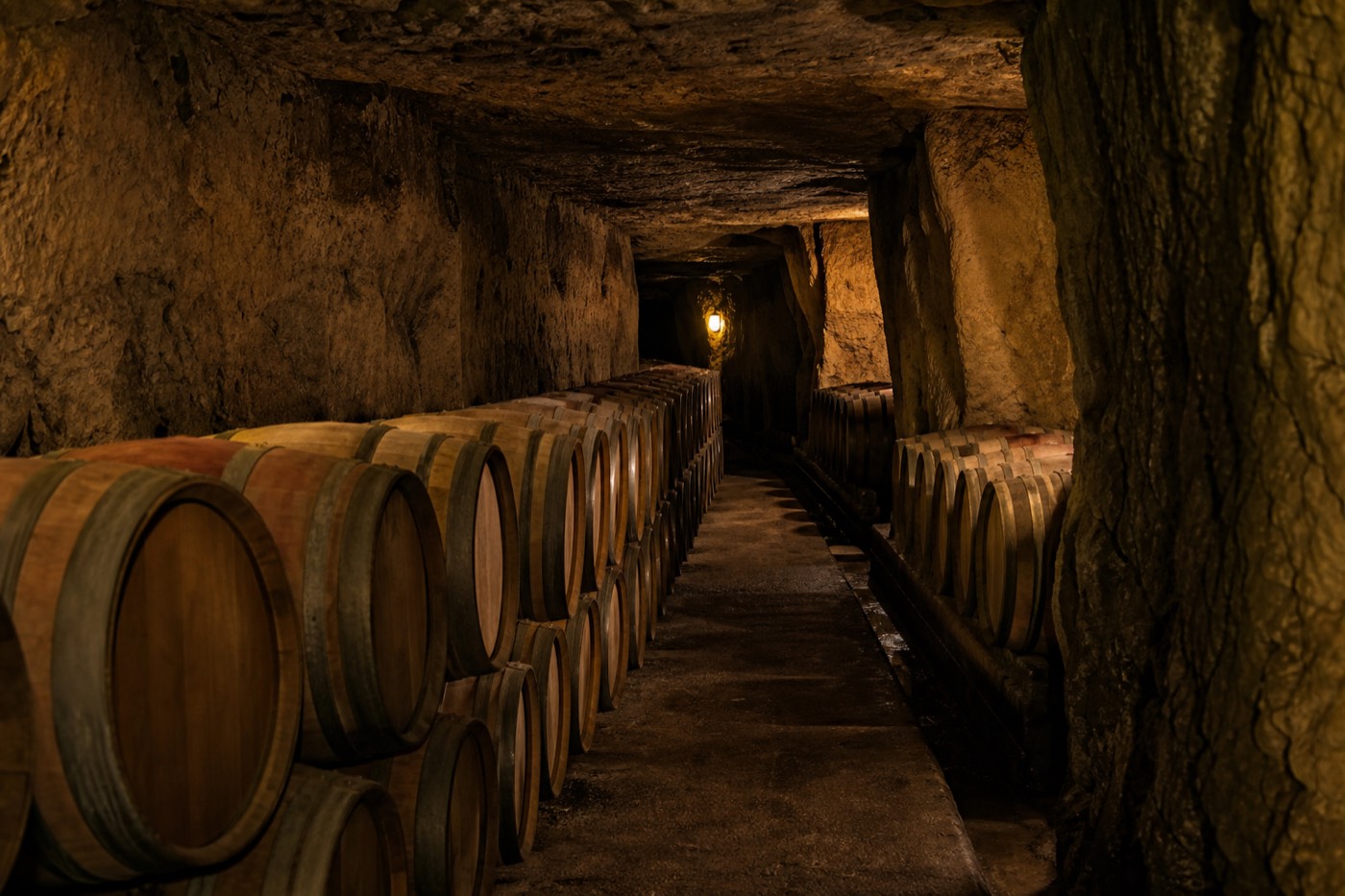
The Monolithic Church, carved from a single block of limestone between the 9th and 12th centuries, with a nave 38 meters long and 20 meters high, is the village's signature landmark. See Monolithic Church for more on how it was carved. The underground quarries that supplied the stone for that church, and much of the village above it, are now used to age wine below several of the appellation's estates, which is part of why a Saint-Émilion cellar tour often feels more dramatic than a standard aboveground barrel room.
The village is also home to macarons de Saint-Émilion, a soft almond macaron made to an 18th-century recipe attributed to the village's Ursuline convent, sold by the dozen since 1620. It's traditionally a dessert or tea-time treat rather than something paired with a tasting, but it's worth seeking out in a village bakery as one of the few food traditions unique to Saint-Émilion specifically, distinct from the broader Bordeaux specialties covered in the Bordeaux wine and food pairing guide.
Should you book Saint-Émilion wineries independently rather than through a tour?
Independent visits work if you're already renting a car and have specific classified estates in mind, but most of Saint-Émilion's 85 classified properties still require an advance appointment, so a tour's main advantage is the relationships already in place, not a shortcut around the booking process itself. The tradeoff is similar to the rest of the Médoc and Right Bank: control of pace versus pre-arranged access.
Saint-Émilion sits close enough to Libourne that train-plus-taxi is technically possible from Bordeaux, but it adds transfers and doesn't solve the appointment problem at any individual château. Self-drive rental runs roughly EUR 40-70 a day region-wide, and independent tastings at estates that accept individual visitors are typically free to around EUR 20 per person, again consistent with the wider region rather than a Saint-Émilion-specific rate. For a visitor without a car and without existing relationships at specific classified estates, the e-bike tour or the half-day Médoc-or-Saint-Émilion tour remain the more reliable routes to an actual guided visit rather than an afternoon of unanswered emails.
A realistic day plan for winery-hopping in Saint-Émilion
A full day built around Saint-Émilion's wineries realistically covers 2 château visits plus the village itself, whether by e-bike or minivan; trying to add a third estate usually means cutting the village walk short, which most first-time visitors regret more than skipping one extra tasting. Two properly guided estate visits, done well, beats three rushed ones.
| Time | Stop |
|---|---|
| Morning | Transfer from Bordeaux, first château visit and cellar tour |
| Midday | Tasting, then lunch (picnic on the e-bike route, or continue directly on the half-day option) |
| Early afternoon | Second château visit and tasting |
| Late afternoon | Village walk: Monolithic Church, underground quarries, free time |
| Return | Transfer back to Bordeaux |
The discipline to stop at two estates, rather than push for three, is worth defending even when a third château sounds tempting mid-day. Each proper visit, cellar tour plus seated tasting, runs close to an hour once you account for the walk between rooms and the guide's explanation, and a Saint-Émilion day already carries meaningful transfer time simply reaching the appellation from Bordeaux. Sacrificing the village walk to squeeze in a third estate trades the one thing that makes Saint-Émilion different from every other Bordeaux sub-region, its genuine historic core, for a tasting that could just as easily happen back in the city at a wine bar.
| Traveler type | Best format |
|---|---|
| Limited time or mobility, wants one solid classified visit | Half-day Médoc-or-Saint-Émilion tour, Right Bank option |
| Full day free, wants vineyards up close and a village walk | e-bike tour to Saint-Émilion |
| Wants Saint-Émilion alongside other sub-regions in one day | 3 wineries tour with a gourmet picnic |
| Already has a car and specific classified estates in mind | Independent booking, appointment required at most estates |
If the wine style itself, rather than the winery selection, is still the open question, the difference between Médoc and Saint-Émilion wine breaks down the Merlot-versus-Cabernet Sauvignon comparison in more depth.
Should you choose Saint-Émilion over a Médoc day, if you only get one?
Choose Saint-Émilion if a walkable historic village and softer, more approachable wine matter as much as the tasting itself; choose the Médoc if structure, tannin and the 1855 Classification's history are the priority. Both sides of the river offer a genuinely classified estate visit for a similar price and time commitment, so the decision really comes down to style, not access.
Saint-Émilion's advantage is that it does double duty as a destination: a UNESCO World Heritage village with real architecture and history layered on top of the wine, something no Médoc commune offers at the same level. The Médoc's advantage is depth of prestige, three First Growths in Pauillac alone, plus Margaux's 21 classified growths, a concentration of famous names Saint-Émilion doesn't quite match despite its own 85-estate classified list. Neither case is wrong. The Médoc or Saint-Émilion: which tour to book guide walks through this exact decision in more depth if it's still unresolved, and the site's own flagship half-day tour actually removes the need to choose in advance at all, since it offers both regions as a same-booking choice rather than forcing a decision before you've even landed in Bordeaux.
Ready to actually get inside a classified Right Bank estate rather than admire the famous ones from the road? See dates for the e-bike tour to Saint-Émilion and plan the village time around that departure.