Sauternes & Barsac: Bordeaux's Sweet Wine Country
Grapes that look ruined are the entire point here. Sauternes and its smaller neighbor Barsac turn a fungal infection into one of the world's most sought-after dessert wines, on purpose, every autumn.
Château d'Yquem's own visit tiers, by price
Per-person pricing for Château d'Yquem's own guided tastings, from the estate's own reservation system; other classified Sauternes and Barsac estates set separate prices of their own.
What actually makes Sauternes and Barsac different from the rest of Bordeaux?
Sauternes and Barsac are the two Bordeaux appellations built entirely around a fungal infection the winemaker deliberately allows to spread through the vineyard: botrytis cinerea, known as "noble rot," which shrivels the grape and concentrates its sugar into an intensely sweet white wine. Everywhere else in Bordeaux, a grower spends the growing season keeping rot away from the crop. Here, the entire economics of the region depend on the right kind of rot arriving on schedule.
Use the options below to weigh where will your Sauternes day start. Start with the booking choice, or refine the shortlist after the guide.
Booking choice: A private, tailored Sauternes outing lasting 3–8 hours, with local château visits and private transport. View Sauternes Château Day
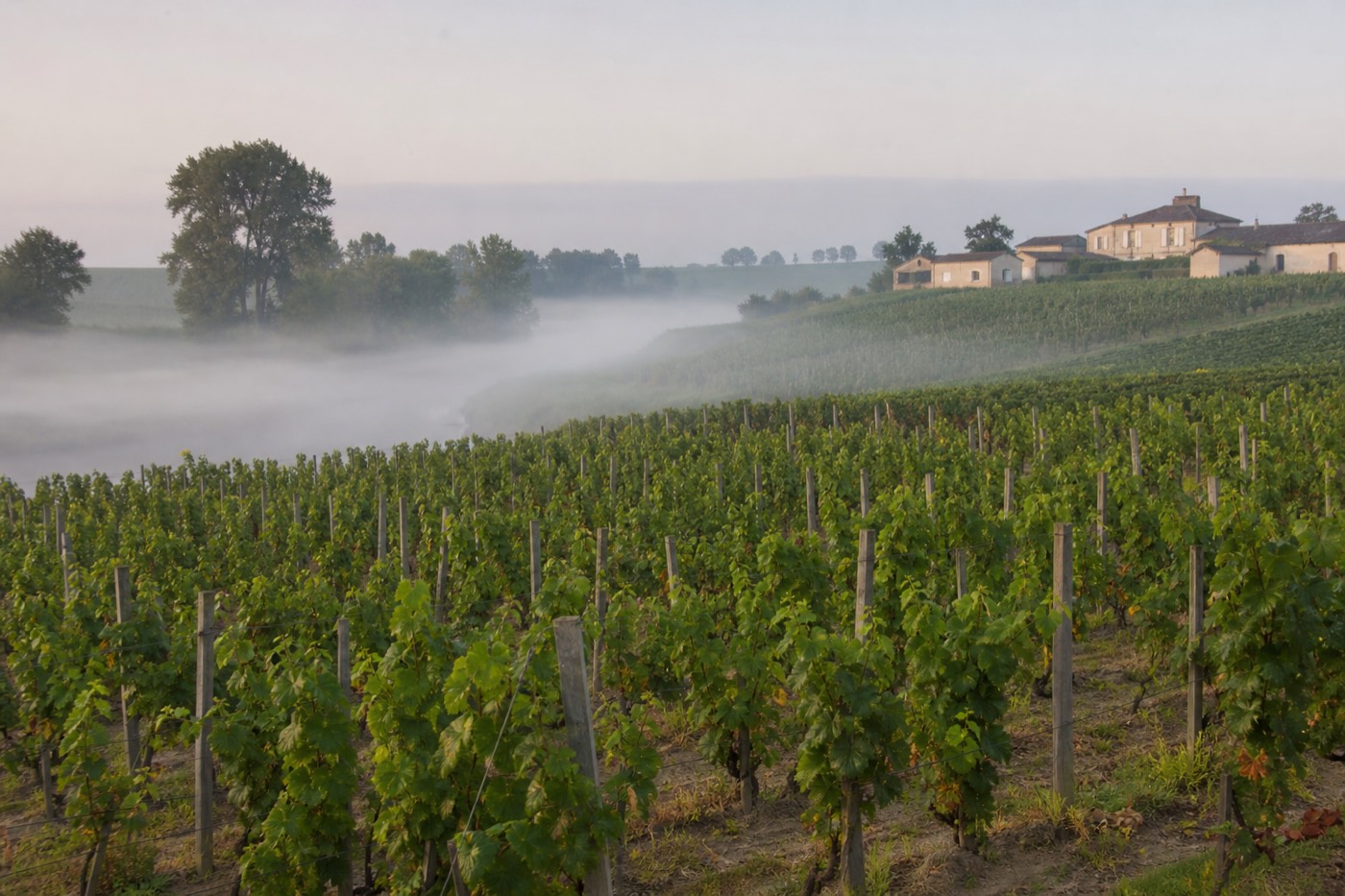
Both appellations sit south of Bordeaux city, within the wider Graves area, on the Left Bank side of the Garonne. Sauternes covers five communes: Sauternes itself, Barsac, Bommes, Preignac and Fargues. Barsac is the one exception in that list, a commune that qualifies for the Sauternes appellation but is also allowed to bottle its wine under its own separate Barsac AOC instead, whichever a grower there prefers. That single quirk, one commune with two legal names for its wine, is the cleanest way to understand how Sauternes and Barsac relate: Barsac is part of Sauternes geographically and administratively, and its own thing on the label at the same time.
The guide to Bordeaux's wine regions covers Sauternes at a glance alongside Médoc, Saint-Émilion, Pomerol and Graves. This page goes narrower: how the sweetness actually gets made, what it costs, which named châteaux matter, and what a real visit or tasting looks like.
| Sauternes and Barsac at a glance | |
|---|---|
| Communes | Sauternes, Barsac, Bommes, Preignac, Fargues |
| Label options | All five can label as Sauternes; Barsac alone can also label as Barsac AOC instead |
| Location | South of Bordeaux city, within the wider Graves area, Left Bank of the Garonne |
| Grapes | Sémillon (majority) and Sauvignon Blanc, both affected by noble rot |
| Wine style | Intensely sweet, concentrated white dessert wine |
What is noble rot, and how does botrytis actually turn grapes into dessert wine?
Noble rot is Botrytis cinerea, the same fungus that ruins grapes almost everywhere else in the wine world, but under Sauternes and Barsac's specific autumn conditions it punctures the grape skin, lets water evaporate out, and leaves behind a shriveled berry with far more concentrated sugar, acidity and flavor than a healthy grape ever reaches. It's rot repurposed as a winemaking tool rather than treated as a disease.
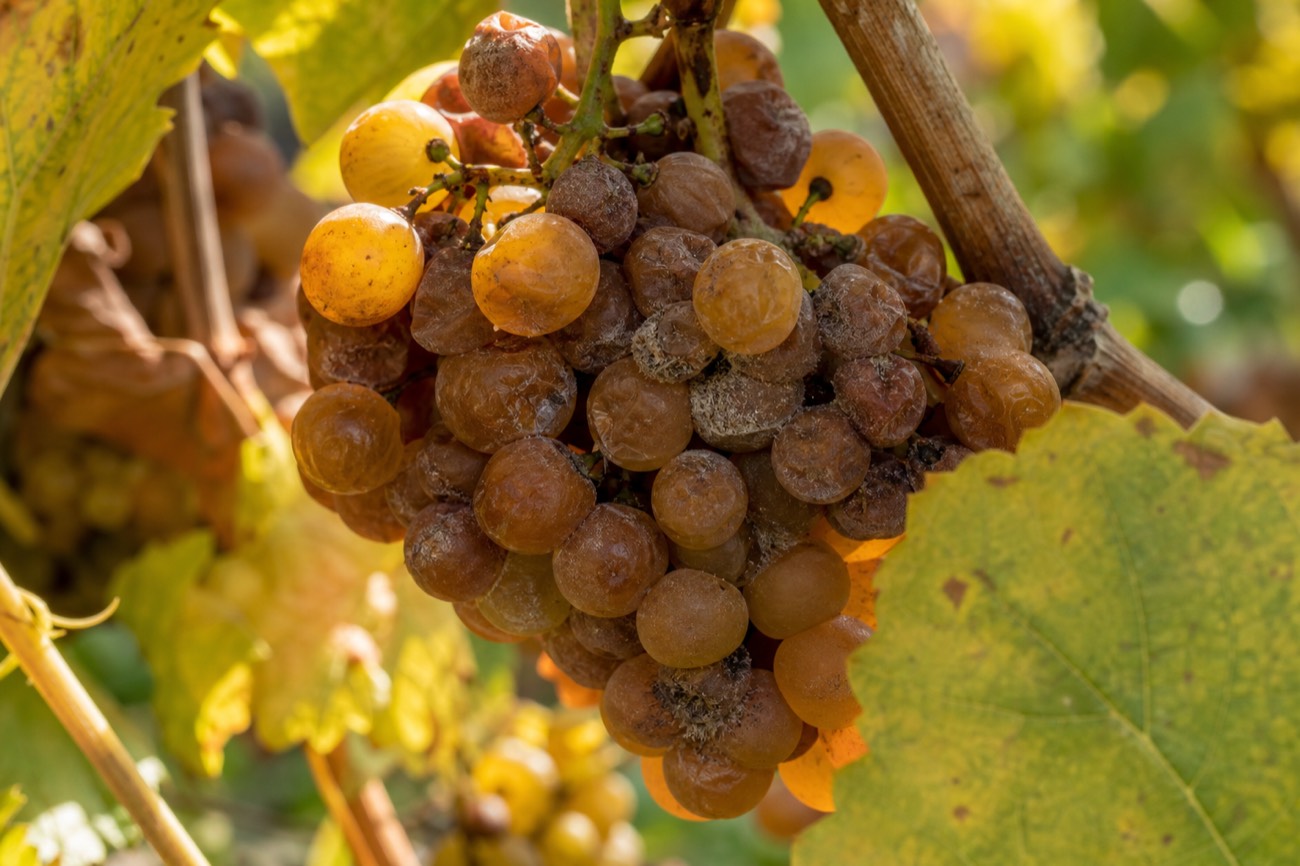
The mechanism depends on geography most visitors never notice on a map. The Ciron, a small, cool, spring-fed tributary, flows into the much larger and warmer Garonne right at the edge of this region. Where the two rivers meet, the temperature difference produces thick morning fog through much of the autumn harvest window, humid enough to trigger botrytis on the ripening Sémillon and Sauvignon Blanc grapes. That fog usually burns off by early afternoon into clear, dry sun, which stops the same fungus from turning destructive and rotting the fruit outright instead. Get the humid mornings without the dry afternoons, and a vineyard loses its crop to ordinary grey rot. Sauternes and Barsac happen to sit in one of the few places on earth where the balance tends to fall the right way most years, though not every year, which is part of why some vintages here are legendary and others are simply skipped.
What that means for yield is the real shock for most first-time visitors. A grapevine that would normally fill a bottle of dry white wine yields, on average, closer to a single glass of Sauternes once the shriveled, botrytis-affected berries are pressed. Harvest can't happen in one pass either, since the fungus doesn't spread evenly through a vineyard or even across a single bunch. Pickers return through the same rows repeatedly, sometimes as many as six separate passes per vine, selecting only the berries that have reached the right stage of noble rot that week and leaving the rest for the next pass. That process can stretch the harvest into October or November, weeks after every red-wine appellation in Bordeaux has already finished picking.
| Sauternes/Barsac harvest at a glance | |
|---|---|
| Trigger | Botrytis cinerea ("noble rot") on Sémillon and Sauvignon Blanc grapes |
| Conditions needed | Humid autumn mornings (Ciron/Garonne confluence fog) followed by dry, sunny afternoons |
| Harvest style | Multiple selective passes by hand, up to around six per vine |
| Typical yield | Roughly one glass of finished wine per vine, far below a dry-wine appellation |
| Harvest window | Often stretches into October-November, well after Bordeaux's red-wine harvest ends |
Why is this wine so expensive, and is it actually worth the price?
Sauternes and Barsac cost what they cost because the labor-to-bottle ratio is extreme: a small, hand-picked, multi-pass harvest yielding roughly a glass per vine simply can't be produced as cheaply as a normal dry white, and the top names carry the same collector demand and classification prestige that drives up prices across Bordeaux generally. The sweetness is not the expensive part. The harvest method is.
A vineyard that would need one mechanized or single-pass hand harvest for a dry white instead needs a trained crew walking the same rows again and again over several weeks, judging by eye and taste which berries have reached the correct stage of noble rot and which haven't, berry by berry in the most careful operations. That labor cost gets folded directly into the bottle price, on top of everything else that already makes classified Bordeaux expensive: reputation, limited production and a classification system that has ranked the top Sauternes and Barsac estates since 1855, the same year as the Médoc's famous red-wine ranking.
Whether it's worth the price is a matter of what you're comparing it to. A half-bottle of a well-regarded Sauternes or Barsac, since these wines are traditionally sold in 375ml half-bottles rather than standard 750ml, often costs less than a bottle of a mid-tier classified red from the Médoc, while representing a genuinely rare production style few other wine regions in the world attempt at this scale. For a visitor who has never tasted a properly botrytized sweet wine, it's arguably one of the more distinctive things to try in Bordeaux specifically, rather than a wine style available everywhere.
Which châteaux define Sauternes and Barsac, and can you actually visit them?
Château d'Yquem stands alone as the region's only Premier Cru Supérieur, a rank above every other estate in the 1855 Sauternes/Barsac classification, and it's also one of the more genuinely visitor-ready icon names in Bordeaux, open daily by reservation with several tour tiers rather than the trade-only access common at the top of the Médoc. Below Yquem, the 1855 ranking covers 26 estates in total: 11 Premier Crus and 14 Deuxièmes Crus, split across Sauternes and Barsac.
Yquem's own visiting program runs in clear tiers rather than one fixed format. The entry-level "Discovery" tasting is a 90-minute guided visit paired with the current vintages of Château d'Yquem and its dry white Y, priced at roughly €84 per person. Above that sit two private tasting formats built around older vintages: a two-vintage tour (2016 and 2010) at roughly €200 per person, and a trilogy tour spanning three vintages (2016, 2010 and 2006) at roughly €350 per person. All visits are by reservation only, booked directly through Château d'Yquem's own booking page, and none of them are same-day walk-ins.
| Château d'Yquem's own visit tiers | Format | Price |
|---|---|---|
| Discovery | 90-minute guided visit + tasting of 2018 Y and 2018 Yquem | €84/person |
| Two-vintage tour | Private tasting of 2016 and 2010 Yquem | €200/person |
| Trilogy tour | Private tasting of 2016, 2010 and 2006 Yquem | €350/person |
Barsac's own Premier Crus include Château Climens and Château Coutet, the largest estate in Barsac at around 38.5 hectares, family-run by the Baly family since 1977. Château Doisy-Daëne, a Deuxième Cru in Barsac held by the Dubourdieu family since 1924, is another name worth knowing if a bottle turns up on a Bordeaux wine list. Over in the Sauternes communes proper, Château Suduiraut and Château Rieussec are two of the better-known Premier Crus, and Château Lafaurie-Peyraguey, also a Premier Cru, has taken a very different route to visitor access in recent years: it's now a boutique hotel under the Lalique name, which the overnight château stays question covers separately.
| Château | Commune | 1855 tier | Notable for |
|---|---|---|---|
| Château d'Yquem | Sauternes | Premier Cru Supérieur (alone) | Genuinely bookable daily; three price tiers, €84-€350 |
| Château Coutet | Barsac | Premier Cru | Largest estate in Barsac, roughly 38.5 hectares |
| Château Climens | Barsac | Premier Cru | One of Barsac's most respected names |
| Château Suduiraut | Sauternes (Preignac) | Premier Cru | Well-known, widely available Sauternes producer |
| Château Rieussec | Sauternes (Fargues) | Premier Cru | Well-known, widely available Sauternes producer |
| Château Lafaurie-Peyraguey | Sauternes (Bommes) | Premier Cru | Now a Lalique-run boutique hotel; overnight stays possible |
| Château Doisy-Daëne | Barsac | Deuxième Cru | Dubourdieu family estate since 1924 |
The Bordeaux wine classification guide covers how the 1855 Sauternes/Barsac ranking relates to the Médoc's better-known red-wine classification, created the same year but judged by entirely different criteria. The famous Bordeaux châteaux guide covers Yquem's access policy alongside the Médoc's icon reds, if comparing visiting difficulty across the whole region is the goal.
How do you actually drink Sauternes, and what pairs with it?
Sauternes and Barsac are traditionally poured with savory food as often as dessert, most classically with Roquefort or another strong blue cheese and with foie gras, where the wine's sweetness and acidity cut through rich, salty or fatty flavors rather than simply matching a sweet dish to a sweet wine. Treating it purely as an after-dinner pour undersells what it's actually built to do at the table.
Serving temperature matters more here than for most Bordeaux reds: Sauternes and Barsac are best served well chilled, closer to a crisp dry white's temperature than a red's, which sharpens the acidity that keeps the sweetness from feeling heavy. The Bordeaux wine and food pairing guide goes deeper on the Roquefort, foie gras and dessert pairings specifically, and the Old Town food and wine walking tour is the three-hour option that works through pairings on foot.
| What actually pairs with Sauternes/Barsac | Why it works |
|---|---|
| Roquefort or another strong blue cheese | Sweetness and acidity cut through the cheese's salt and richness |
| Foie gras | A classic, traditional Bordeaux pairing; sweetness balances the fat |
| Crème brûlée or fruit-based desserts | Familiar sweet-with-sweet pairing, though not the only style that works |
| Heavy red-meat dishes | Generally a poor match; save these for the region's reds instead |
When does the harvest actually happen, and does that change what a visit looks like?
Harvest here runs later and less predictably than anywhere else in Bordeaux, often starting in September but frequently stretching into October or even November across multiple selective passes, which means a September or early-October visit can land mid-harvest with pickers still working the rows on any given day. Unlike a red-wine estate's single, plannable pick, there's no fixed "harvest week" to build a trip around.
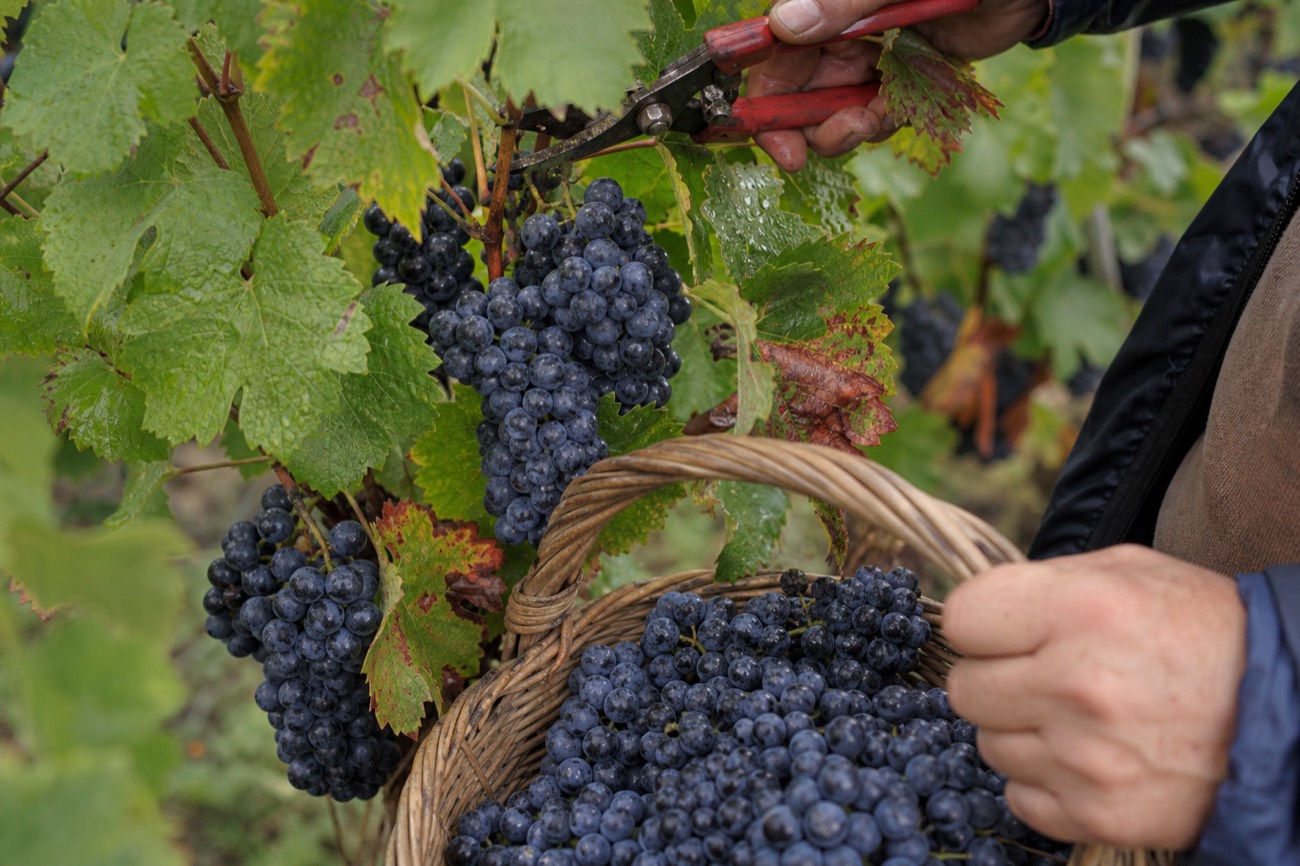
That unpredictability cuts both ways for a visitor. Arrive during an active tri, one of the selective picking passes, and there's a real chance of seeing hand-selection in progress, which few Bordeaux visits offer given how mechanized red-wine harvests have become elsewhere. Arrive on a day between passes and the vineyard may look quiet regardless of the calendar date. Regular tastings and guided visits at estates like Château d'Yquem run on their own separate booking schedule and aren't paused for harvest the way a smaller, less visitor-oriented estate's tours might be.
How do you actually get to Sauternes and Barsac, and is there a real tour that covers it?
The standard Médoc or Saint-Émilion half day does not cover Sauternes. A private Graves–Sauternes 2CV route and a local Sauternes château outing are now included in the choices below. Check the starting point: the local Sauternes outing does not establish a transfer from Bordeaux.
That tour, run by a different GetYourGuide-listed operator rather than any of this site's own nine signature products, spends five hours covering Graves, Pessac-Léognan and Sauternes together in an open-top vintage-style convertible, with two château visits and a tasting of three wines led by the estate's own winemaker. It's the single most direct way to see Sauternes without renting a car and self-driving the route independently. The Graves and Pessac-Léognan guide covers the other two regions on that same route in full.
Anyone renting a car instead should budget the better part of a day: Sauternes and Barsac alone are roughly 45-60 minutes each way from central Bordeaux, and pairing them with a stop in Graves or Pessac-Léognan on the way down or back adds meaningfully to the drive without adding much distance, since all three sit along a similar southbound line out of the city.